
June 25, 2026
Apple rebuilds Siri while AI money and talent keep moving fast
The dawn
The week's AI news is about who builds it and who pays for it
This week was less about a single flashy demo and more about the machinery behind AI: a household assistant getting rebuilt, investors writing very large checks, and the Arab world quietly building tools that speak its own language. Here is what a curious reader actually needs to know.
The signal
Apple unveils a far more capable Siri built on its own AI
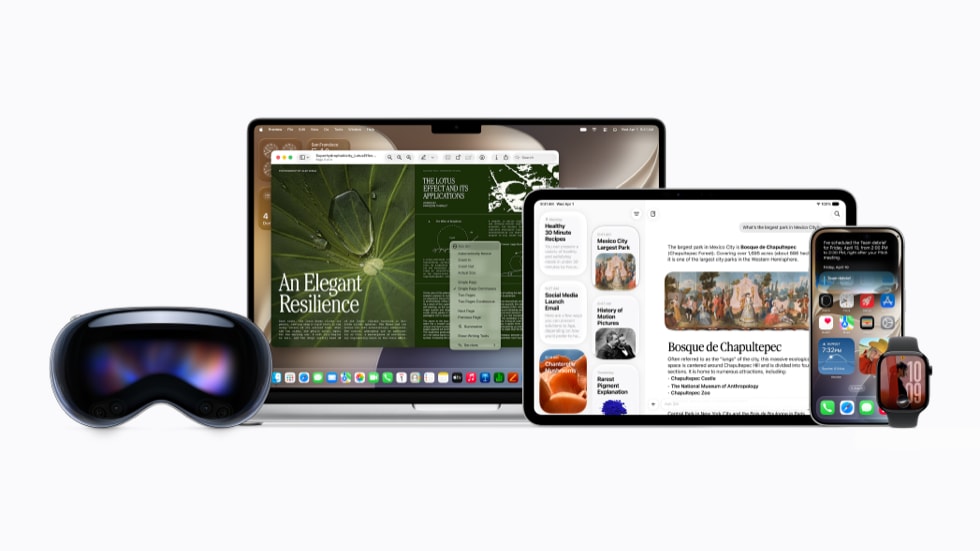
At its developer conference this month Apple introduced Siri AI, a rebuilt version of its assistant that can hold a real back-and-forth conversation, answer general questions from the web, and pull useful details from your own messages, emails, and photos. The point is that Siri, long seen as the weakest of the big assistants, is finally trying to catch up to ChatGPT-style tools while keeping personal data on the device or on private servers. If you own an iPhone, this is the change most likely to touch your daily life, though it starts in English in the United States later in 2026 before expanding.
Anthropic puts its Claude assistant directly inside Slack
Anthropic launched Claude Tag, which lets a team mention its Claude assistant in a Slack channel the same way you would tag a coworker, then hand it a task to work on in the background. It reads the channel's history for context and can flag useful information from connected tools, so it behaves less like a chatbot you visit and more like a teammate that is already in the room. It matters because this is how AI quietly moves into everyday office work; for now it is in beta for Anthropic's business customers.
Ramp raises $750 million as investors chase finance tools that run on AI

Ramp, a company whose software helps businesses manage their spending, cards, and bills, raised $750 million and is now valued at $44 billion, almost triple its worth a year ago. Investors are betting on its plan to build AI helpers that handle routine money tasks like approving expenses and paying vendors automatically. The deal is a useful signal of where the money is going right now: practical, boring-sounding business software with a clear AI story attached.
AI music maker Suno raises $400 million as the industry's lawsuits continue

Suno, an app that lets anyone generate full songs by typing a description, raised $400 million at a $5.4 billion valuation, more than double its worth just months earlier. It now has over two million paying users, even as some big record labels keep suing it over the music used to train its system, while Warner Music has settled and signed a licensing deal. The story is a clear example of the central fight in AI right now: the technology is racing ahead while the questions about who owns the training material are still unsettled.
In Arabic
UAE company CNTXT AI raises $60 million to build Arabic-first AI
CNTXT AI, a company based in the United Arab Emirates, raised $60 million to expand AI tools that keep a country's or company's data under its own control rather than on foreign servers. It also runs Munsit, billed as the most accurate Arabic voice AI, and recently bought a startup that specializes in understanding different Arabic dialects. For the region this is encouraging proof that serious, locally owned AI is being built for Arabic speakers, not just translated from English systems.
More than $69 million flows into Arab startups, including one in Syria

Fresh funding kept moving across the Arab world this week, with more than $69 million going into startups spanning AI, fintech, logistics, and health. Notably, a Syrian health-tech startup called Moadna, which builds clinic management software, raised early-stage money, a small but real sign of investors looking again at Syria. For founders in the region, the takeaway is that capital is still active even after a slower start to the year, especially in the Gulf.
Built in Syria
We invite Syria's builders to share their work in Nahda
In every issue we set aside space for the building happening inside Syria. If you are working on a product, a startup, or an open-source project tied to AI, technology, or entrepreneurship, we would love to hear about it and introduce it to our readers. Share your story with us, and your work could be the one we feature next.
The board
We open the board for jobs and returning talent
Nahda is a place where opportunities meet people. If your team is hiring in AI, technology, or entrepreneurship, or if you are part of the talent thinking about returning to Syria or the region to help build it, tell us. We want to help connect skilled people with the opportunities they deserve.
The last word
The tools are getting closer to home
The clearest thread this week is that AI is no longer something happening only in distant labs. It is moving into our phones, our offices, and our own language.